Serving Anthem, New River and Cave Creek24/7 Emergency Dispatch: (480) 806-2944
Desert Hills AZ Experts Plumbers24/7 PLUMBING DISPATCH · MARICOPA COUNTYCall (480) 806-2944 →
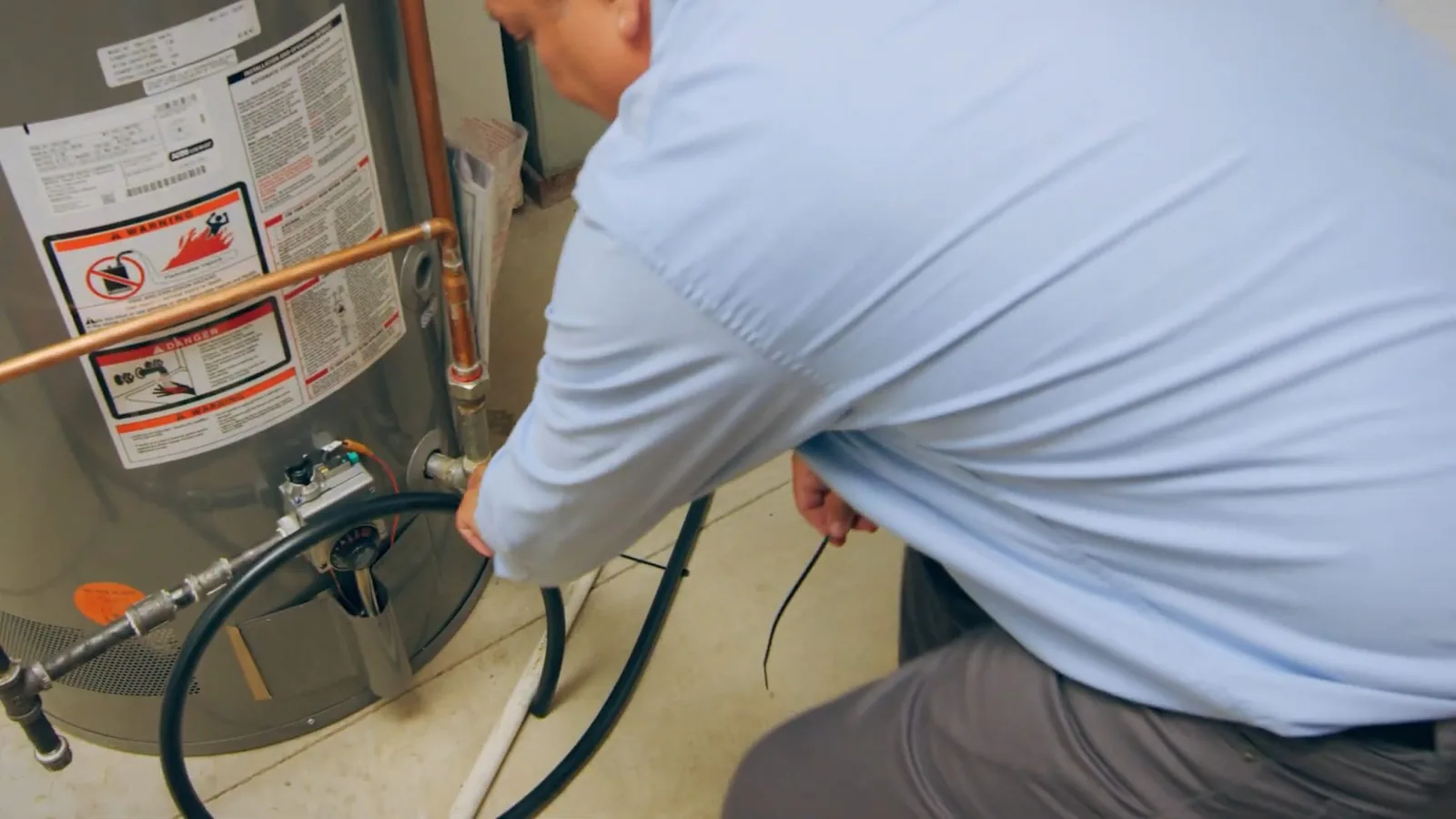
Man in a light blue shirt crouching beside a tank water heater with a drain hose attached.
Draining a tank clears sediment that builds up over years of heating.

Home » Services » Water heater repair

24/7 Emergency Line Open

Tank Water Heater Repair in Desert Hills: No Hot Water to Leaks

The shower runs cold, or the floor around the tank is wet. Describe what you see, and a plumber serving your area will work out whether the tank needs a part, a flush or a replacement.

Call (480) 806-2944 now →
  • Licensed and insured plumbers
  • Same-day service when available
  • 24/7 emergency dispatch
Symptoms

No hot water or only lukewarm? Start with the symptom

Most tank heater problems announce themselves in a few ways: the water never gets hot, it runs out too fast, it smells or turns rusty, or it leaks. Each points to a different part of the unit, and a plumber starts with the symptom before opening anything. The quick checks are worth doing first. Is the breaker on, or is the gas supply open? Is the thermostat set where you left it? Did a power outage trip anything? If those are fine, the problem is inside the heater.

Symptom, likely cause and what a plumber checks
SymptomLikely causeWhat gets checked
No hot water at allFailed element, thermostat or igniter; no power or gasPower, gas supply, thermostat and element or burner
Hot water runs out fastSediment, a failed lower element or a broken dip tubeTank bottom, element and dip tube
Lukewarm waterThermostat set low or one element deadThermostat and each element
Rusty or smelly waterCorroded tank or spent anode rodAnode rod and tank condition
Water around the baseLoose fitting, relief valve or a failing tankSource of the water, then the tank seams
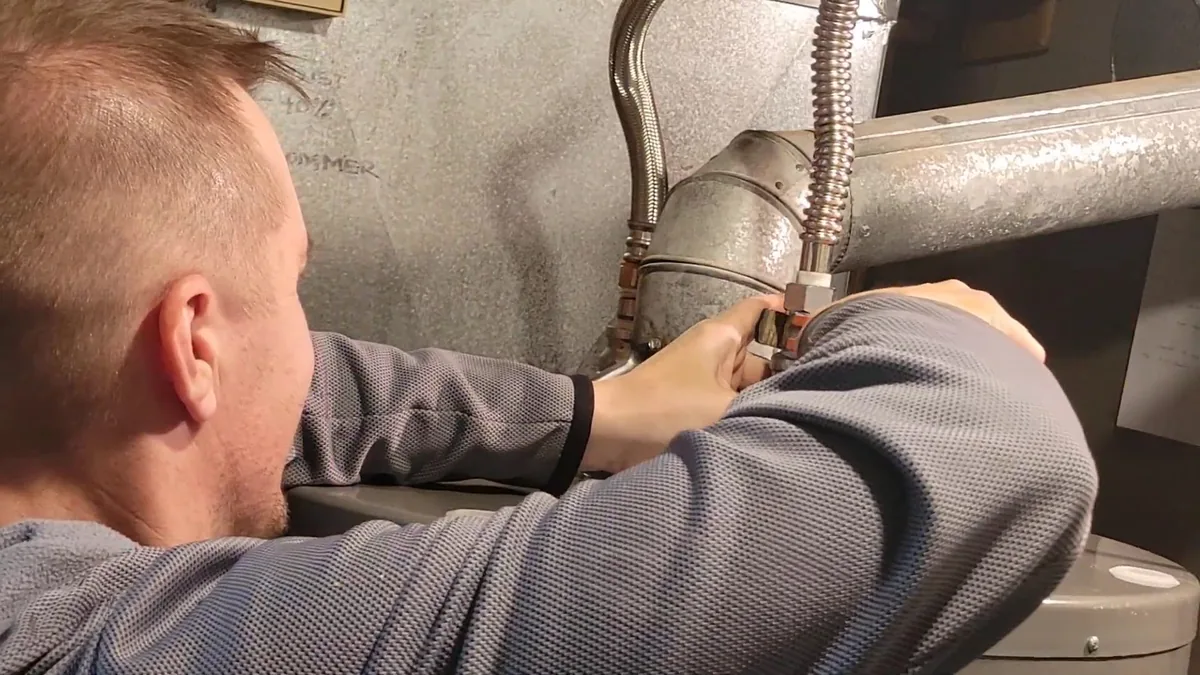
Man leaning in to work on a flue pipe connection above a water heater.
Flue connections are inspected during a repair because poor venting can also cause shutdowns.
Gas and electric

Gas vs electric: what fails in each and what a plumber checks

Gas heaters burn fuel under the tank, so most failures involve ignition and safety controls. A pilot that will not stay lit, or a burner that will not fire, usually points to a worn thermocouple, a dirty burner or a failing gas control valve. Electric heaters use heating elements and thermostats, so no hot water usually means a burned element or a bad thermostat. The plumber tests rather than guesses. On electric units, a meter checks each element and the thermostat. On gas units, the pilot, the flame and the venting are checked. Venting matters: a blocked flue can push exhaust back into the house. Gas work has one firm rule. A gas smell means leaving the house and phoning the gas utility or 911 once you are outside. The heater gets inspected after the area is safe.

Safety note

Never relight a pilot if you smell gas, and never work on a heater with the power or gas still connected. Turn off the supply, then call.

24/7 emergency dispatch

No hot water? Call now and tell dispatch what the tank is doing.

Call (480) 806-2944 now →
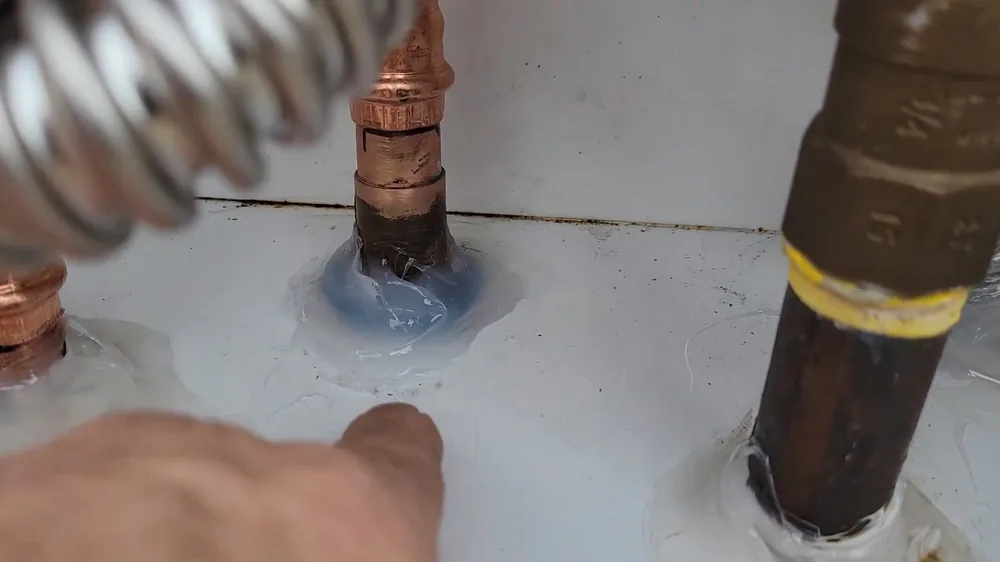
Pipe connections on top of a water heater with a hand resting on the tank.
Corrosion or dripping at the top fittings does not always mean the tank needs replacing.
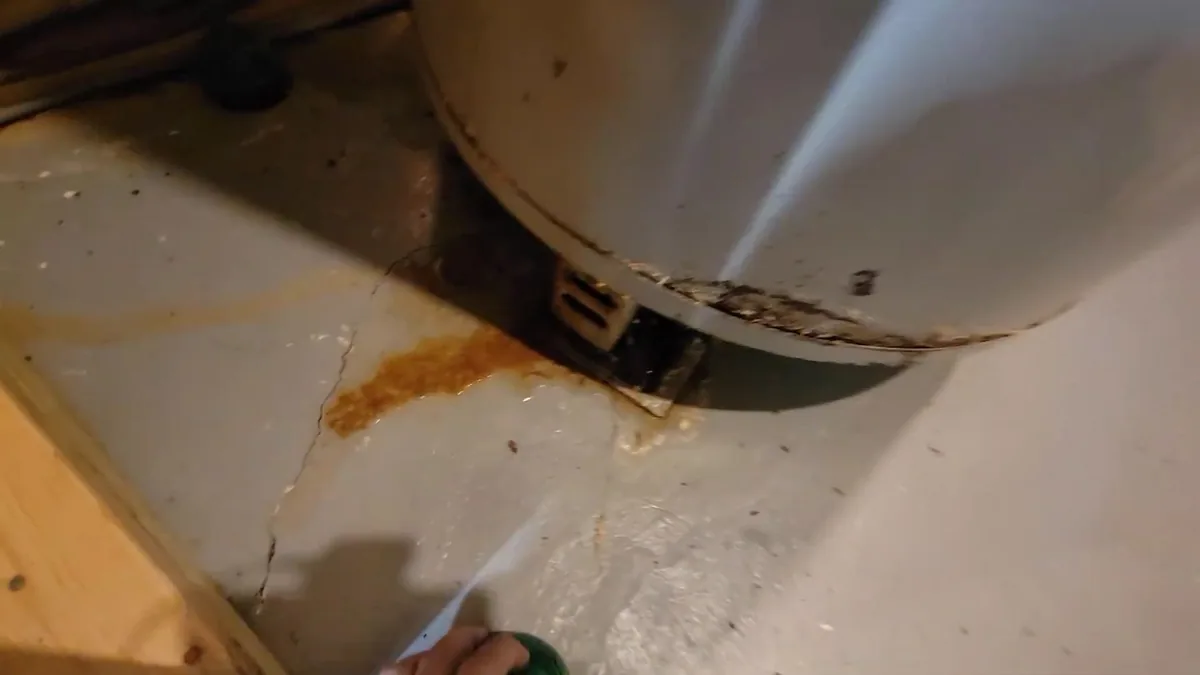
Rust and water stains around the base of a water heater tank.
Rust and water at the base can mean the tank itself is leaking, which usually calls for replacement.
Leaks

Water at the base of the tank: leaking fitting or leaking tank?

A wet floor under a heater has two very different causes. A leaking fitting, a loose drain valve or a weeping relief valve can be repaired in one visit. A leak from the tank body itself means the steel has corroded through, and no repair will hold.

The plumber dries everything, runs the heater and watches where new water appears. Water at the top points to the inlet and outlet connections, water at the side to the relief valve or a burner access panel, and water seeping from the bottom to the tank or the drain valve.

Close the cold water valve above the tank at the first sign of a leak, and switch the heater off at the breaker or the gas control. If the water has reached walls or flooring, the water damage restoration service covers drying and mold checks.

Hard water

Hard water, sediment and the flush that slows tank wear

Minerals in hard water separate out when it is heated and settle at the bottom of the tank. That layer forces the heater to work harder, can cause rumbling, and holds heat against the steel where corrosion starts. A flush, which drains water from the bottom of the tank, removes much of it.

EPCOR Water Arizona reported hardness near 18 grains per gallon for its Anthem system in 2025.

Source: EPCOR Water Arizona, 2025 report for the Anthem system.

A home on a different supplier or a private well may see different numbers, which is why a plumber tests first. Arizona hard water is widely blamed for sediment buildup, and local advice columns recommend annual flushing and checking the anode rod, a replaceable rod that protects the tank from corrosion. A softener can reduce scale at the source, and the hard water treatment page covers it.

Sources: KTAR, Rosie on the House, water heater maintenance; Rosie on the House, Hard Water: Arizona’s Biggest Water Heater Enemy.

Noise

Popping, rumbling and ticking: what the sounds mean

Popping or rumbling from a gas or electric tank is usually water boiling under a blanket of sediment. It is a sign to flush the tank soon. A ticking sound can be pipe expansion as the water heats, which is harmless in most cases. Hissing or sizzling needs attention, because it can come from a leak onto a hot burner or element.

Describe the sound to dispatch as exactly as you can: when it happens, how loud it is, and whether it comes from the top, the sides or the base. A sound that appears only while the burner or element is running points to heat and sediment, while one that appears when water is drawn points to the plumbing connections.

A tank that has begun to make noise after years of quiet is often asking for the flush it has not had. Left alone, the sediment hardens, and a layer that could have been washed out becomes a crust that is much harder to remove.

Safety valves

Pressure relief valve and expansion tank: small parts that protect the tank

The temperature and pressure relief valve is the heater safety release. It opens if pressure or temperature climbs too high, and it should drain through a pipe to a safe place. A valve that drips often means high water pressure or a failing expansion tank, and replacing the valve alone may not solve the cause.

Expansion tanks absorb the extra volume of water as it heats in a closed system. A waterlogged one no longer cushions pressure, and the relief valve starts to drip. A plumber can test the tank with a gauge and replace it if the air side has failed. Do not cap or plug a relief valve discharge pipe. A blocked relief valve can let a tank over-pressurize.

Repair or replace

Repair or replace: when the tank is past saving

Age, leak location and the cost of parts all weigh on the decision. A tank leaking from the steel shell cannot be repaired, and a heater that has failed several times in a short period is likely near the end of its life.

If you are leaning toward a new unit, the water heater replacement page covers sizing, fuel and code questions, and the tankless water heater service page covers on-demand units. Say on the call which direction you are leaning so the plumber arrives prepared for both.

Ask the plumber for an honest read on the tank. A unit that is working but nearing the end of its life can still be a candidate for a small repair, and a plumber who says so is giving you the information to plan a replacement on your schedule instead of in a flood.

24/7 emergency dispatch

Cold shower or wet floor? Dispatch answers 24/7.

Call (480) 806-2944 now →
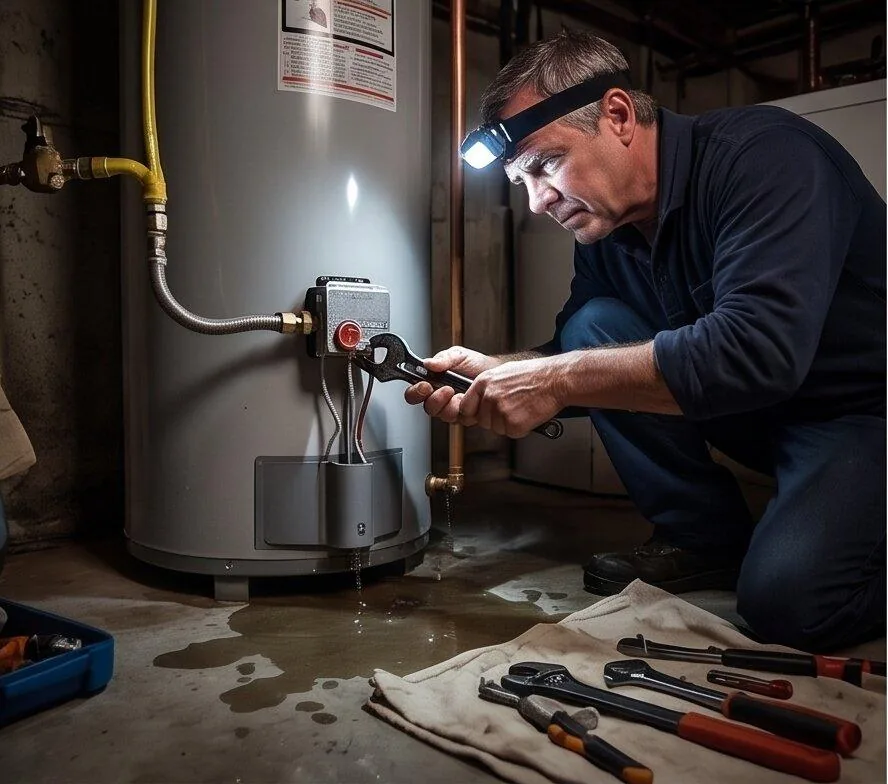
Technician with a headlamp working on a gas water heater in a basement with tools laid out on a wet floor.
A wet floor around the heater is worth mentioning when you call so the plumber arrives prepared.
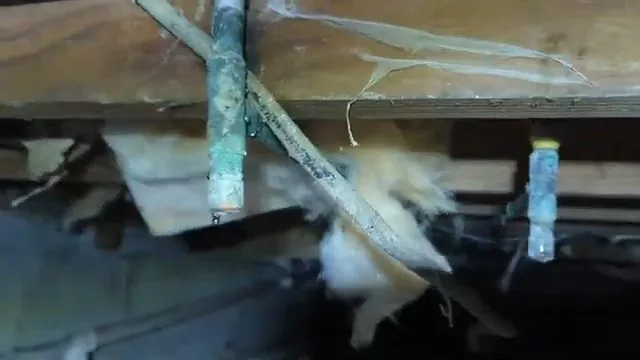
Corroded pipes with green and white buildup hanging below floor joists.
Corroded supply pipes near the heater can drip even when the tank itself is sound.
Service visit

How a water heater repair call proceeds

01

Describe

You explain the symptom and the heater type.

02

Test

Power, gas, thermostat and venting are checked.

03

Repair

The failed part is replaced or the leak is sealed.

04

Advise

You hear whether the tank has years left.

Questions

Water heater questions homeowners ask before they call

Is it safe to relight the pilot myself?

Only if there is no gas smell and you follow the manufacturer label. If the pilot will not stay lit, a plumber should check the thermocouple and gas control.

Why does my water heater run out so fast?

Sediment takes up space in the tank, or a lower element has failed. A flush and an element test usually tell which.

Is a leaking water heater an emergency?

Yes. Close the cold water valve above the tank, switch the heater off and call, because a leak can damage floors quickly.

Should I flush the heater every year?

Many local guides recommend it for hard water. Ask the plumber what your tank and water call for.

24/7 emergency dispatch

Hot water back today. Dispatch answers 24/7.

  • Licensed and insured plumbers
  • Same-day service when available
  • 24/7 emergency dispatch
Call (480) 806-2944 now →
Call now, 24/7